


This itinerary brings together the many different facets of Uzbekistan: ancient cities of the Great Silk Road, unique architectural monuments, traditional crafts, life in mountain villages and the harsh beauty of the Aral Sea region. Over eleven days you will get acquainted with the historical heritage of the country, see places where time seems to have stood still, taste dishes of the national cuisine and travel to the shores of the Aral Sea — one of the most unusual and impressive regions of Central Asia.
Themes: Cultural, Historical, Archaelogical, Adventure, Gastronomical tours,
This itinerary brings together the many different facets of Uzbekistan: ancient cities of the Great Silk Road, unique architectural monuments, traditional crafts, life in mountain villages and the harsh beauty of the Aral Sea region. Over eleven days you will get acquainted with the historical heritage of the country, see places where time seems to have stood still, taste dishes of the national cuisine and travel to the shores of the Aral Sea — one of the most unusual and impressive regions of Central Asia.
The journey will begin in Nukus, where the famous collection of avant-garde art is kept, and continue among the ancient fortresses of Khorezm and the architectural treasures of Khiva and Bukhara. Then you can look forward to an introduction to the traditions of local masters, a rest at a rural guesthouse, legendary Samarkand and the modern capital of Uzbekistan — Tashkent.
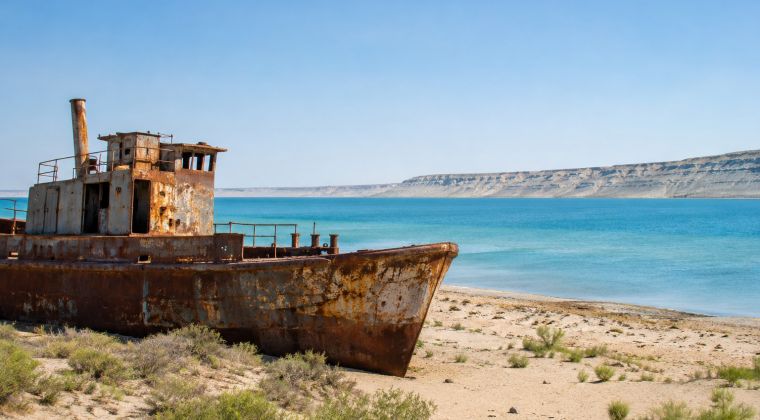
A special place in the program is occupied by the trip to the Aral Sea. Here the boundless expanses of the Ustyurt Plateau, abandoned ships and traces of the vanished sea create landscapes that cannot be mistaken for any other place.
Upon arrival at Urgench airport you will be met by a representative of the host company. After the introductions and transfer, you will set off for Nukus — the capital of the Republic of Karakalpakstan, located in northwestern Uzbekistan.
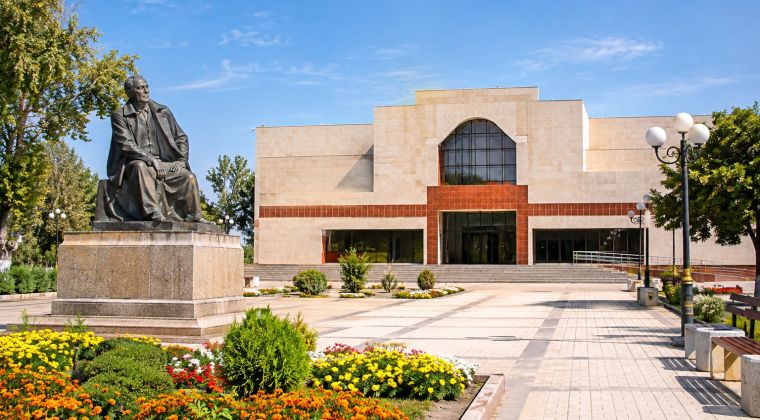
After check-in at the hotel and breakfast, your acquaintance with the city begins. The main point of the program will be a visit to the Igor Savitsky State Art Museum, one of the most unusual museums in Central Asia.
The museum is known for its unique collection of Russian and Turkestan avant-garde, works by artists of the early 20th century, and a collection of items of traditional Karakalpak art. Thanks to the enthusiasm of Igor Savitsky, it was possible to preserve here the works of many artists whose creative work was at one time banned and forgotten.
The tour of the museum will be conducted by an English-speaking museum guide. This will let you get to know the history of the collection and the artistic heritage of the region more deeply.
Overnight at a hotel in Nukus.
After breakfast you will set off toward the Aral Sea. The road will pass through the arid territories of Karakalpakstan and lead to Muynak — a town that was once a major fishing port on the shore of the Aral Sea.
Today Muynak has become one of the best-known symbols of the region's ecological disaster. One of the main sights of the town is the famous Ship Graveyard — a place where fishing vessels have remained on the dried-up seabed. Once they plied the waters of the Aral, and now they recall the large-scale changes that have occurred in the nature of the region.
You will visit the local history museum, which presents materials telling about the life of the former port town, fishing and the gradual retreat of the sea.
Next, the route will continue across the expanses of the Ustyurt Plateau. This is a territory with unusual landscapes, steep slopes, stony plains and a practically boundless horizon. Along the way, stops are planned at ancient burial sites and other interesting objects preserved in this sparsely populated region.
By evening you will arrive at the shore of the Aral Sea. Here, amid majestic natural scenery, your yurt camp will be set up.
Dinner awaits you, along with the chance to spend the evening far from the city bustle, enjoying the silence of the desert space and the extraordinary atmosphere of the Aral Sea region.
Overnight at the yurt camp. Facilities are shared.
The morning will begin with the opportunity to greet the sunrise in the extraordinary setting of the Aral region. The first rays of the sun will gradually light up the desert expanses, creating an impressive picture against the backdrop of the boundless horizon.
After breakfast you will head back toward Nukus. Along the way, the program will continue with an introduction to the historical and natural sights of the Ustyurt Plateau.
One of the stops will be the ancient fortress of Kurgancha-Kala. Next you will see the Kubla-Ustyurt area, where harsh natural conditions have preserved a special look of the terrain.
The route will also pass through the surroundings of Lake Sudochye. Here are the ruins of an old lighthouse and the territory of Urga — a place of historical significance for the region. Lake Sudochye is known as an important natural area attracting many birds, including migratory ones.
After a lunch stop in Kungrad, the journey will continue with a visit to Mizdakhkan, one of the best-known historical and archaeological complexes of Karakalpakstan.
On the territory of the complex are ancient burial structures and mausoleums, including the mausoleums of Nazlumkhan Sulu and Shamun Nabi. This place is surrounded by numerous legends and is considered one of the significant historical and spiritual monuments of the region.
The sightseeing program will conclude with a visit to Gyaur-Kala, an ancient settlement that has preserved traces of the life and defensive architecture of past eras.
By evening you will return to Nukus.
Overnight at a hotel.
Distance: about 180 km
After breakfast you will set off for Khiva — one of the most atmospheric cities of Uzbekistan, which has preserved the look of a medieval Eastern city.
The main part of the tour will take place in Ichan-Kala — the historic inner city of Khiva, surrounded by mighty fortress walls. This architectural ensemble is included in the UNESCO World Heritage List and is a true open-air museum.
Your acquaintance with the city will begin at the Ata-Darvaza gate. Next you will see one of the main symbols of Khiva — the Kalta-Minor minaret, faced with bright turquoise tiles. Nearby is the Muhammad Amin Khan madrasa, which amazes with its scale and traditional Eastern decoration.
You will visit Kunya-Ark — an old citadel that served as the residence of the Khivan rulers. Within its walls were palace rooms, administrative buildings and structures connected with the life of the khan's court. The tour will continue with the madrasa of Muhammad Rahim Khan.
Special attention will be paid to traditional crafts. You will visit a carpet-making workshop connected with the activities of the organization Operation Mercy and with initiatives to preserve craft traditions with the support of UNESCO. Here you can get acquainted with the process of making carpets and the features of handwork.
Then the route will lead to the mausoleum of Pahlavan Mahmud — one of the most revered religious and architectural monuments of Khiva. Its recognizable dome and exquisite interior decoration make the complex one of the most impressive places in the old city.
You will also see the Islam Khoja minaret and madrasa, the Juma Mosque with its famous wooden columns, the Tash-Hauli palace complex, the Allakuli Khan madrasa and the Said Niyaz Shalikar mosque.
The introduction to the traditions of the region will conclude with a visit to the silk museum. Here you will learn about the history of silk fabric production and be able to observe the process of dyeing the material.
Overnight at a hotel in Khiva.
Distance: about 100 km to the fortresses and 450 km to Bukhara
After breakfast you will leave Khiva and set off for the ancient fortresses of Khorezm, located amid desert landscapes.
The first stop will be Ayaz-Kala — a complex of ancient defensive structures rising above the surrounding plain. These fortresses were built in different historical periods and were part of the defensive system of ancient Khorezm. Their massive walls and their location on heights make it possible to imagine how important a role they played in protecting settlements and trade routes.
The next point on the route will be Toprak-Kala — an archaeological monument that was once one of the most important political and cultural centers of Khorezm. The residence of the rulers was located here, and the city itself was distinguished by a well-thought-out layout, mighty fortifications and palace structures.
A walk among the ancient walls will let you touch the history of a civilization that existed long before the appearance of the modern cities of the region.
After viewing the fortresses you will continue on to Bukhara. The transfer will pass through the Kyzylkum desert — a vast territory with sandy massifs, sparse vegetation and natural landscapes characteristic of Central Asia.
Upon arrival in Bukhara — check-in at the hotel and rest after the long road.
Overnight at a hotel.
Bukhara is one of the oldest cities of Central Asia, which for centuries was an important center of trade, science, religion and crafts. Its historic center has preserved the atmosphere of the medieval East: narrow streets, old madrasas, mosques, the domes of trading galleries and cozy squares.
The tour will begin with a visit to the Chashma-Ayub mausoleum, known as the spring of the prophet Job. This place is connected with ancient legends and occupies a special position among the religious monuments of Bukhara.
Then you will see the mausoleum of Ismail Samani — an outstanding example of early Islamic architecture of Central Asia. Its brickwork forms complex geometric patterns, demonstrating the skill of the builders of that time.
The next stop will be the Bolo-Hauz mosque with graceful wooden columns reflected in the water of the pond located in front of it. After this you will go to the Ark — an ancient citadel that for many centuries served as the residence of the Bukharan rulers.
The walk will continue through the historic quarters of the city. You will visit the Lyabi-Hauz ensemble, which formed around an old pond and has become one of the coziest corners of Bukhara.
You will also get acquainted with the trading domes — covered bazaars where in the past the workshops and shops of craftsmen were located. Among them a special place is occupied by Magoki-Attori — one of the oldest religious monuments of the city.
A separate impression will be an introduction to Uzbek cuisine. A master class on preparing traditional Bukharan plov awaits you, during which you can learn the secrets of preparing one of the best-known national dishes.
Next, the tour will continue at the Poi-Kalyan architectural ensemble — one of the main symbols of Bukhara. It includes the majestic Kalyan minaret, the Kalyan mosque and the Mir-i-Arab madrasa. The complex is considered one of the most significant architectural ensembles of the Islamic world.
You will also see the madrasas of Ulugbek and Abdulaziz Khan, which demonstrate different stages in the development of Eastern architecture and decorative art.
To conclude the day, a visit to the Sitorai Mohi-Hosa palace is planned — the country residence of the last Bukharan emirs. The architecture of the palace harmoniously combines traditional Eastern motifs and European elements of design.
Overnight at a hotel in Bukhara.
Distance: about 290 km
After breakfast you will set off on a journey through small towns and settlements of Uzbekistan, where the traditions of folk crafts and the way of rural life are still carefully preserved.
The first stop will be Gijduvan — a town known for its distinctive ceramics school. Here you will visit the workshop of the Narzullaev family, whose members continue the traditions of making the famous Gijduvan ceramics.
During your visit to the workshop you will learn about the features of the local ornament, methods of working clay, shaping the items and traditional painting. Gijduvan masters are famed for the characteristic patterns and rich color palette of their work.
Then the route will continue toward Nurata. Here you will see the ruins of an ancient fortress that is traditionally associated with the name of Alexander the Great. This structure recalls the rich historical past of the region and its importance at the crossroads of ancient routes.
In Nurata is also the famous Chashma spring — a place revered by local residents and connected with numerous legends. The complex includes the spring, a mosque and other religious structures. The tour of Nurata will be conducted with an English-speaking guide.
After getting acquainted with the town you will continue on to the mountain village of Sentyab, located amid the picturesque landscapes of Nuratau.
Upon arrival you will be accommodated in a traditional guesthouse. Here you will be able to get acquainted with the daily life of local residents, their customs and hospitality.
In the evening, home cooking awaits you and the chance to feel the atmosphere of a genuine Uzbek village — far from noisy tourist centers.
Overnight at a guesthouse in Sentyab.
Distance: about 160–170 km
The morning in Sentyab will let you enjoy the calm of the mountain settlement and the surrounding nature. After breakfast, a walk is planned through the picturesque surroundings, where you can see traditional rural landscapes and become acquainted with the natural features of the region.
Then you will go to Samarkand — a legendary city whose history spans more than two thousand years. In different eras it was a major center of trade, science, culture and crafts, and in the time of Amir Temur it turned into one of the greatest capitals of the East.
Your acquaintance with Samarkand will begin with a visit to Registan Square — the main architectural symbol of the city. The ensemble combines three majestic madrasas: Ulugbek, Sherdor and Tilla-Kari. Their façades are decorated with complex ornaments, mosaics and glazed tiles, creating the unique look of the square.
The next stop will be the Gur-Emir mausoleum — the resting place of Amir Temur and members of the Timurid dynasty. Its ribbed dome, rich interior decoration and exquisite finishing make a particular impression.
You will also visit the Bibi-Khanum mosque — a grand structure built in the era of Temur and has become one of the most recognizable monuments of Samarkand.
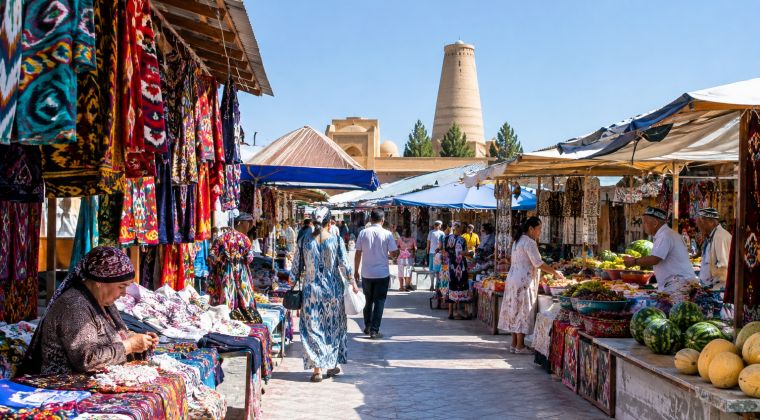
Then a walk through the Siab Bazaar awaits you. It is one of the largest traditional markets of the city, where you can get acquainted with local products, aromatic spices, dried fruits, nuts and the famous Samarkand flatbread.
The tour will continue with a visit to the Shah-i-Zinda necropolis. The complex is a whole gallery of mausoleums decorated with exquisite mosaics and majolica. Its architectural decoration reflects the richness of the artistic traditions of the Timurid era.
During the day, a master class on making manti is planned — a traditional dish of Uzbek cuisine. You will be able to become acquainted with the features of preparing the dough and filling and the ways of serving this popular treat.
Overnight at a hotel in Samarkand.
Distance: about 310 km
After breakfast you will continue getting to know the history of Samarkand. One of the first stops will be the Afrasiab settlement site — an ancient settlement on the site of which arose one of the most important centers of Sogdiana.
Here you can see archaeological traces of an ancient city that existed long before the era of Amir Temur. Of particular value are fragments of wall painting that tell about diplomatic contacts, court life and the culture of medieval Samarkand.
Next you will visit the mausoleum of the Prophet Daniel — a revered place connected with religious legends and the history of the city.
Then the route will lead to Konigil — a traditional craft settlement known for making Samarkand paper. At the “Meros” workshop you will become acquainted with the ancient technology of making paper from mulberry bark. Here the old methods of handmade production are carefully preserved, thanks to which Samarkand once became known as one of the centers of the papermaking craft.
The program will continue with a visit to the Ulugbek Observatory. This place is connected with the name of an outstanding ruler and scholar of the 15th century who made a significant contribution to the development of astronomy. Part of a giant sextant that was used to observe celestial bodies has survived to this day.
After the sightseeing program you will go to the railway station and travel to Tashkent on the high-speed “Afrosiyob” train. The journey will take approximately 2.5 hours.
Upon arrival in the capital — transfer to the hotel and check-in.
Overnight in Tashkent.
Tashkent is a modern metropolis in which the historical heritage of the East coexists with wide avenues, green parks, modern buildings and the unusual architecture of the Soviet period.
The sightseeing day will begin with a visit to the historic Hast-Imam complex — one of the main spiritual centers of the city. Here are located the Tilla-Sheikh mosque, the Barak Khan madrasa and other religious structures.
A special place in the complex is occupied by the Muyi Mubarak library, where the famous ancient Quran, known as the Uthman Quran, is kept. This historical manuscript is considered one of the most valuable Islamic relics.
Next you will become acquainted with the new Center of Islamic Civilization — a large-scale cultural and educational complex dedicated to the history of the Islamic world and the scientific heritage of the region.
Then you will go to the Chorsu bazaar — one of the oldest and most colorful markets of Tashkent. Under its famous blue domes are trading rows with fruits, dried fruits, spices, national sweets and products by local craftsmen.
The introduction to the city will continue with a ride on the Tashkent metro. Each station is distinguished by its own architectural design, decorative elements and artistic solutions, so the metro here is not only transport but also a kind of underground gallery.
You will also visit the Monument of Courage, dedicated to the tragic events of the 1966 earthquake and the rebuilding of the city.
Next, the route will pass through Independence Square — one of the main public squares of the capital. You will see the building of the State Academic Bolshoi Theater named after Alisher Navoi and Amir Temur Square, where a monument to the great military commander and statesman stands.
The sightseeing program will conclude with a visit to the Museum of Applied Arts. Its exhibition introduces the richness of the traditional crafts of Uzbekistan: embroidery, ceramics, woodcarving, jewelry art and national fabrics.
Overnight at a hotel in Tashkent.
After breakfast, depending on the departure time, you will have free time for rest or an independent walk around the capital.
At the appointed time — transfer to Tashkent International Airport and the end of the journey through Uzbekistan.


