


We invite you on a fascinating journey through Uzbekistan — a country of ancient civilizations, Eastern legends, and architectural masterpieces. Over eight days, you will become acquainted with four remarkable cities, each of which holds its own history and unique atmosphere: mysterious Khiva, ancient Bukhara, majestic Samarkand, and modern Tashkent.
Themes: Cultural, Historical, Adventure, Gastronomical tours, Religious ,
We invite you on a fascinating journey through Uzbekistan — a country of ancient civilizations, Eastern legends, and architectural masterpieces. Over eight days, you will become acquainted with four remarkable cities, each of which holds its own history and unique atmosphere: mysterious Khiva, ancient Bukhara, majestic Samarkand, and modern Tashkent.
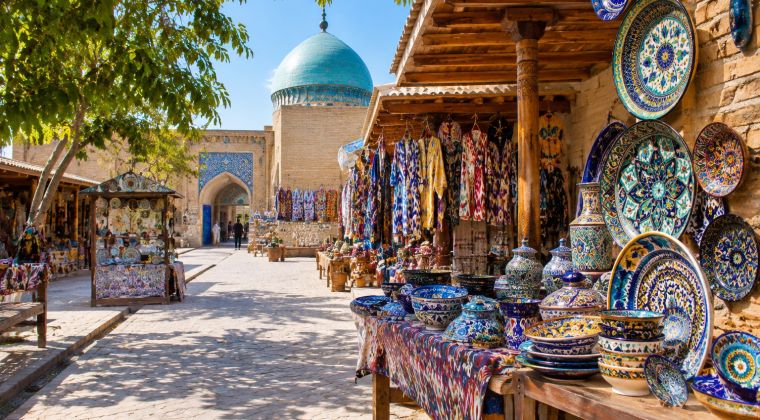
The route allows you to trace the history of the Great Silk Road, see famous madrasas, mosques, minarets, and mausoleums, stroll through old Eastern bazaars, and get acquainted with traditional crafts. Awaiting you are a visit to the workshop of hereditary potters in Gijduvan, an introduction to the art of making silk paper in Konigil, and the opportunity to take part in cooking national Uzbek plov as a guest of local residents.
The program includes not only excursions to the main historical monuments but also encounters with the country’s living culture: national music and dances, traditional cuisine, craft workshops, and walks along the atmospheric streets of ancient cities.
Transfers between the main cities are organized on high-speed trains, and the trip to Shakhrisabz goes through a picturesque mountain pass. This journey will be a wonderful opportunity to see the brightest sights of Uzbekistan, get acquainted with its cultural heritage, and discover the multifaceted East.
Arrival at Urgench International Airport. After completing customs formalities, you will be met by a driver with a sign.
Next, a transfer to Khiva is provided — one of the most distinctive cities of Uzbekistan, which has preserved the atmosphere of a medieval Eastern settlement. The distance is about 30 km, and the drive takes approximately 40 minutes.
Upon arrival — check-in at the hotel.
First breakfast.
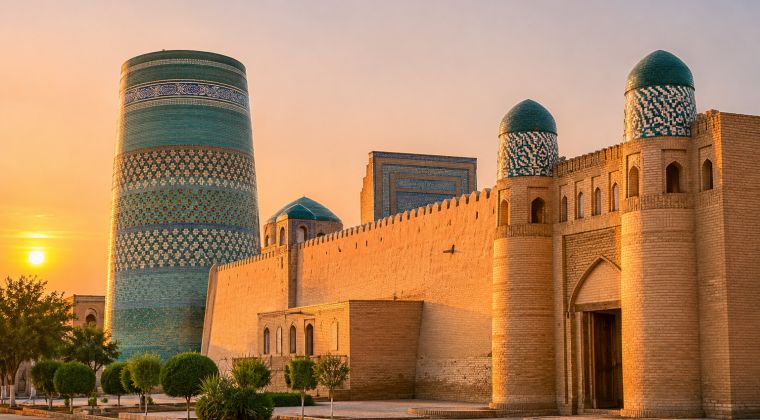
Meeting with the guide and start of the tour of Itchan Kala — the historic center of Khiva, surrounded by powerful fortress walls. This unique open-air architectural ensemble is included in the UNESCO World Heritage List and allows you to imagine what Eastern cities looked like several centuries ago.
During the walk, you will see the Ata Darvaza Gate, the famous Kalta Minor Minaret, and the Muhammad Amin Khan Madrasa. Then you will visit the Kunya Ark Fortress with its inner courtyards and learn about the history of the Muhammad Rahim Khan Madrasa — named for a ruler, poet, and thinker known by the literary name Feruz.
The route will continue at the Pahlavan Mahmud Mausoleum — one of the main shrines of Khorezm — as well as at the Islam Khoja Madrasa and Minaret. You will visit the Juma Mosque, famous for its unusual interior and numerous carved wooden columns.
The tour will conclude with a visit to the Tash-Hauli Palace. Its inner courtyards, exquisite ornaments, and richly decorated rooms, including the famous harem, reveal the features of palace life of the Khiva rulers.
Transfer to the railway station. Departure for Bukhara on the high-speed Manguberdi train.
Departure and arrival times: 07:10–10:37.
Upon arrival, the excursion program in Bukhara begins — one of the oldest cities of Central Asia, which for centuries was an important center of trade, science, religion, and culture on the Great Silk Road.
Acquaintance with the city begins with the Lyabi-Hauz Complex — one of the most recognizable historical ensembles of Bukhara. At its center is an old pond surrounded by madrasas and other architectural monuments. For centuries, this place remained an important part of the townspeople’s public life, a space for meetings and relaxation.
Then you will head to the famous covered trading domes of Bukhara: Toqi Telpak Furushon, Toqi Zargaron, and Toqi Sarrafon. In the past, trading rows were located here, where jewelers, craftsmen, cloth merchants, and merchants from different countries worked.
The next stop will be the Magoki Attori Mosque, whose history is linked to ancient places of worship that existed on this site even before the spread of Islam.
The route continues with the Poi Kalon Architectural Complex — one of the main symbols of Bukhara. The ensemble includes the majestic Kalon Mosque, the famous Kalon Minaret, and the Mir-i Arab Madrasa. You will also get acquainted with the Ulugh Beg and Abdulaziz Khan Madrasas, which demonstrate the wealth and diversity of Bukhara’s architectural heritage.
Dinner and a culinary master class on cooking Uzbek plov.
In the evening, you will be invited to the home of local residents, where you can get acquainted with the traditions of Uzbek hospitality and take direct part in preparing one of the best-known national dishes — plov. You will learn the features of its preparation and will be able to feel part of the local culinary tradition.
After dinner — transfer to the hotel and check-in.
Overnight in Bukhara.
Breakfast.
Today’s excursion will allow you to get better acquainted with the history of Bukhara, its outstanding architectural monuments, and the legacy of rulers of the past.
The first stop of the program will be the Chashma-Ayub Mausoleum — a historical structure with a sacred spring, associated with legends about the Prophet Job. For many centuries, this place has attracted pilgrims and travelers.
Next, you will visit the Ismail Samani Mausoleum — an outstanding architectural monument of the 10th century and one of the city’s main historical sights. Its unusual brickwork, harmonious forms, and skillfully executed ornaments make the structure a true masterpiece of medieval architecture. The burials of representatives of the Samanid dynasty are located here.
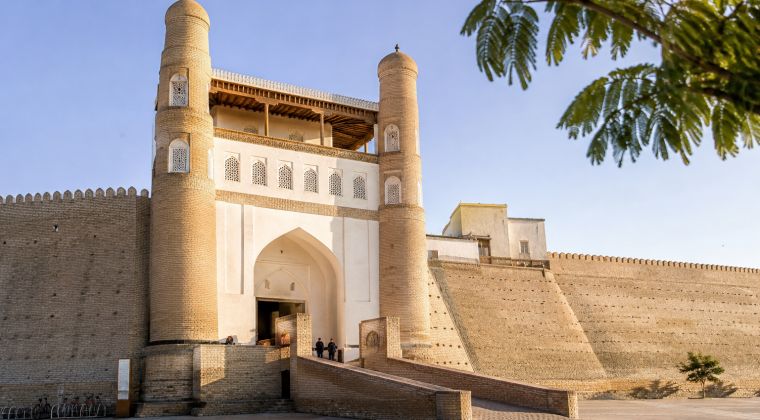
Then the route will lead to the Bolo-Hauz Mosque, known for its elegant wooden columns with intricate carving, and the Ark Citadel — an ancient fortress that for centuries served as the residence of the Bukhara emirs and the administrative center of the state.
In the second half of the tour, you will go to the summer residence of the last Bukhara emir — Sitorai Mohi-Khosa. The name of the palace translates as “The Palace Where the Moon Meets the Stars.” This country complex is distinguished by an unusual combination of Eastern traditions and European architectural elements. Luxurious interiors, decorative halls, fountains, and well-kept gardens allow you to imagine the atmosphere of life of Bukhara’s ruling family.
To conclude the day, you will enjoy a folklore performance at the Nodir Divan-Begi Madrasa. To the sounds of national music, artists will perform traditional Uzbek songs and dances, introducing you to the richness of the local culture.
Overnight in Bukhara.
Breakfast.
Check-out from the hotel and departure for Gijduvan — a small town that has become widely known thanks to its centuries-old traditions of pottery.
Gijduvan is considered one of the important centers of Uzbek ceramics. Here you will visit the workshop of the Narzullaev family — hereditary masters who preserve and develop the traditions of making ceramic items.
During the workshop visit, you will be able to watch the potters at work, learn about the features of the local production technique, and get acquainted with the process of creating items decorated with characteristic patterns and ornaments.
After the tour, the journey continues to Samarkand. The drive will take approximately 4–5 hours.
Upon arrival, you will get acquainted with one of the most renowned cities of the Great Silk Road, which for centuries was an important political, trading, and cultural center of the region.
The tour begins with a visit to the Gur-Emir Mausoleum — the tomb of Amir Temur and members of the Timurid dynasty. This architectural monument is considered one of the most significant structures of Temur’s era and is known for its majestic dome, exquisite decor, and harmonious proportions.
Then you will go to Registan Square — the historic heart of Samarkand and one of the most recognizable architectural ensembles of Central Asia. The square is surrounded by three majestic madrasas: Ulugh Beg of the 15th century, and Sher-Dor and Tilya-Kori of the 17th century. Monumental portals, mosaic panels, Eastern ornaments, and elegant calligraphy create the unique appearance of this place.
After the tour — transfer to the hotel and check-in.
In the evening, you will have free time for an independent walk around Registan Square. In the evening illumination, the architectural ensemble takes on an especially expressive and solemn look.
Overnight in Samarkand.
Breakfast.
In the morning, departure from Samarkand for Shakhrisabz — the hometown of Amir Temur and one of the historical centers associated with the formation and flourishing of the Timurid empire.
The route of about 90 km will take approximately 2 hours. The road passes through the Takhtakaracha mountain pass, from which picturesque panoramas of mountain slopes and surrounding valleys open up. Stops for photographs are provided along the way.
The transfer is carried out by passenger cars or minivans.
Upon arrival, the tour of the main historical monuments of Shakhrisabz begins.
You will visit the ruins of the Ak-Saray Palace, built in the 14th–15th centuries by order of Amir Temur. At one time, it was one of the most grandiose and luxurious residences of the ruler. Today, the surviving parts of the monumental portal allow you to imagine the original size and grandeur of the palace complex.
Next, the program continues with a visit to the Dorus Saodat Complex, associated with the history of Amir Temur’s family. Located here are the mausoleum of Jahangir — the beloved son of the great military commander — as well as other burial structures of the dynasty.
The next stop is the Dorut Tilovat Complex, which includes the Kok Gumbaz Mosque and mausoleums associated with Amir Temur’s family and his spiritual mentors. The complex is of particular value for studying the religious and architectural history of the region.
In the second half of the day, return to Samarkand.
Upon arrival, you will visit the Shah-i-Zinda Necropolis — a unique ensemble of mausoleums of the 14th–15th centuries, located along an ancient street. The architectural complex is famous for its rich decorative finishing: bright majolica, mosaic panels, geometric patterns, and exquisite ceramics. Relatives and associates of representatives of the Timurid dynasty rest here.
Overnight in Samarkand.
Breakfast.
Check-out from the hotel. Today you will continue getting acquainted with the cultural heritage of Samarkand, visiting places that reflect its rich history, trading traditions, and scientific achievements.
At the start of the program — the Bibi-Khanum Mosque, a grandiose 15th-century structure built by order of Amir Temur. In its heyday, it was among the largest mosques in the region and impressed with its scale and architectural design.
Nearby is the Siab Bazaar — the main traditional market of Samarkand. Here you can get acquainted with the local trading culture and see the variety of Eastern sweets, dried fruits, spices, and other national products.
Next, you will go to the village of Konigil, where the “Meros” workshop is located, specializing in the production of traditional silk paper. During the visit, you will learn about the history of this craft and see how the masters preserve the ancient methods of making paper.
The excursion program will conclude with the Ulugh Beg Observatory, founded in 1420 by the outstanding scholar, astronomer, and ruler. This place is a reminder of Samarkand’s significant contribution to the development of medieval science and astronomy.
Transfer to the railway station. Departure for Tashkent on the high-speed Afrosiyob train.
Possible departure time: 16:59 / 17:40 / 18:15 / 18:56.
Upon arrival in Tashkent — meeting with the driver, transfer to the hotel, and check-in.
Overnight in Tashkent.
Breakfast.
Today you will get acquainted with Tashkent — the dynamic capital of Uzbekistan, where historical monuments, Eastern traditions, and modern architecture form the city’s distinctive appearance.
The tour begins with a visit to the Old City and the Hazrati Imam Complex — one of the most significant spiritual and historical centers of the country. The ensemble includes the Tillya Sheikh Mosque, the Barak Khan Madrasa, and the Muyi Mubarak Museum. This complex allows you to touch the religious and cultural heritage of Uzbekistan.
Then you will go to the Chorsu Bazaar — a famous Eastern market that is easy to recognize by its large green dome. A special atmosphere reigns here: the trading rows are filled with the aromas of spices, fresh baked goods, dried fruits, and national dishes. A walk through the bazaar will let you see the everyday life of Tashkent and get acquainted with the traditions of local trade. If desired, you can try dishes of Uzbek cuisine.
The next item on the program will be a ride on the Tashkent Metro. The metro stations stand out for their original design, artistic panels, mosaics, and decorative elements, thanks to which each of them has its own architectural character.
In the second half of the day, the tour continues through the modern part of the capital. The overview program includes:
The viewing of the modern part of the city is carried out in an overview format.
After the tour is completed — transfer to the hotel and check-in.
Overnight in Tashkent.
Optional, upon request: a visit to the Center of Islamic Civilization — a modern cultural and educational complex dedicated to the history and heritage of the Islamic world. One of the oldest copies of the Quran — the Quran of Uthman — is kept here. The visit takes about 2–3 hours.
Breakfast.
Transfer to Tashkent International Airport for departure on an international flight to Italy.
End of the journey through Uzbekistan. Thank you for choosing our program, and we wish you a pleasant journey home!


