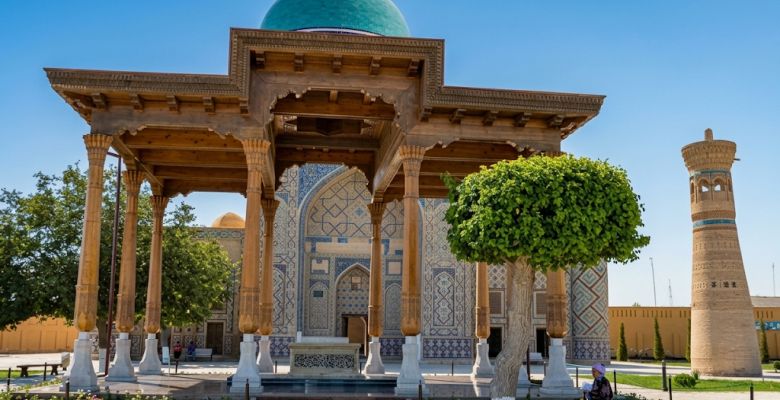
The history of Gijduvan stretches back many centuries, making it almost impossible to establish the exact date of the town’s foundation. Throughout its long history, Gijduvan has repeatedly changed its role and importance in regional life. However, the name of Abdukhaliq Gijduvani occupies a special place in its cultural and spiritual heritage.
Abdukhaliq Gijduvani was a prominent theologian, scholar, and spiritual mentor of the twelfth century. His name is closely associated with the development of the Sufi tradition in Central Asia. He is considered one of the significant representatives of the spiritual school that later became the foundation for the Naqshbandi Sufi order, one of the best-known Sufi orders.
At the heart of Gijduvani’s spiritual teachings was the practice of silent, or quiet, dhikr. He placed particular emphasis on inner work, mindfulness, and spiritual self-improvement. He is also credited with formulating eleven principles of the spiritual path, which later became widely known within the Sufi tradition.
Abdukhaliq Gijduvani shared his knowledge and religious views far beyond his hometown. His activities were also connected with Khwarazm and Khorasan, where his teachings gained followers and recognition.
The spiritual mentor spent the final years of his life in his hometown of Gijduvan. After his death, his burial place became a revered sacred site visited by believers for many years. His memory has been preserved in the town and has become an important part of its spiritual heritage.
Remembering the Great Theologian
The name of Abdukhaliq Gijduvani continues to hold an important place in the history and religious culture of Uzbekistan. Over the years, events have been organised in the country to study his legacy, promote his spiritual and educational works, and preserve historical sites associated with him.
Particular attention is given to Gijduvan itself, where monuments connected with the spiritual mentor are located. Preserving and improving these sites allows future generations to learn about the town’s history and the role it played in the development of Sufi thought in Central Asia.
Today, the name of Gijduvani is known far beyond his hometown. His spiritual legacy is regarded as an important part of the history of Sufism and the cultural heritage of the Bukhara region.
A visit to Gijduvan offers an opportunity not only to discover traditional crafts and the town’s famous ceramics but also to explore its spiritual history. The Mausoleum of Abdukhaliq Gijduvani remains one of the sites associated with the town’s religious heritage, attracting the attention of pilgrims, researchers, and travellers.
Thus, Gijduvan’s history consists of several important layers: the town’s ancient past, the development of crafts and trade, and its rich spiritual heritage. The name of Abdukhaliq Gijduvani has become an inseparable part of this history and continues to connect the modern town with its centuries-old past.