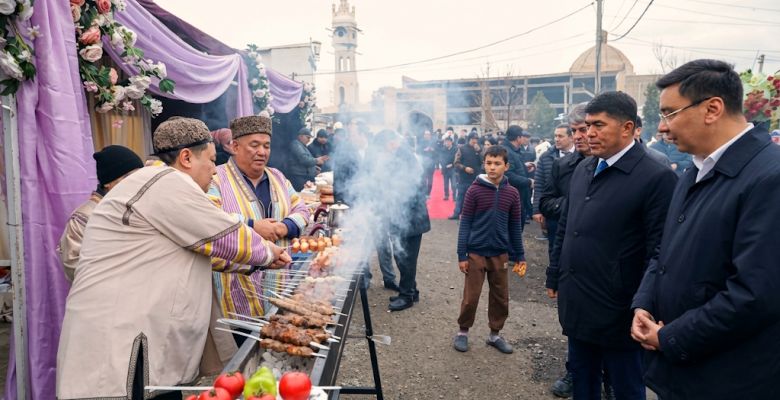
To experience the atmosphere of a traditional Uzbek town, visitors do not need to limit themselves to historical monuments. Sometimes, visiting a local bazaar is enough. In Gijduvan, the market is an important part of urban life. Sellers and buyers meet there every day, exchange news, choose food, purchase gifts, and continue long-standing trading traditions.
The market stalls offer almost everything associated with local culture and cuisine: fresh vegetables and fruit, aromatic spices, dried fruit, nuts, traditional sweets, and various other food products. Alongside these goods, visitors can also find handmade crafts, including traditional ceramics.
The Atmosphere of an Eastern Bazaar
Gijduvan’s markets are interesting not only because of the variety of products they offer. The shopping experience itself becomes part of discovering local culture.
Vendors are generally happy to talk to visitors, explain the origins and characteristics of their products, and help them make a choice. For tourists, these conversations provide an opportunity to interact with local residents and better understand everyday life in the region.
Trading at an Eastern bazaar has its own traditions. Discussing the price of an item can turn into a friendly conversation, and customers are often invited to taste a fruit, sweet, or another product before making a purchase.
Gijduvan Ceramics at the Markets
Ceramics remain one of the most interesting products for travellers. For many centuries, Gijduvan has been recognised as one of Uzbekistan’s important pottery centres. As a result, locally made ceramic products can be found not only in specialised workshops but also among the souvenirs sold at market stalls.
The displays include piyalas, serving dishes, plates, jugs, and other types of tableware. Many items are decorated with traditional patterns and feature bright combinations of colours.
Because they are handmade, every piece has its own individual character. Even products of the same type may differ in their designs, shades, or small details. This is why Gijduvan ceramics are popular among tourists who want to bring home something more meaningful than an ordinary souvenir—a product with a distinctive local identity.
Ceramic tableware can be used as part of interior decoration, for serving meals, or simply kept as a reminder of a journey through the Bukhara region.
What Makes Gijduvan Kebab Special?
Gijduvan is famous not only for its craft traditions but also for its cuisine. One of the town’s main gastronomic symbols is its kebab.
The local version of this dish is prepared according to traditional recipes, although different cooks may have their own methods of preparing the meat, selecting spices, and cooking it over an open fire. As a result, kebab served at different establishments can have its own distinctive flavour.
One common method of preparing the meat involves using water during the marinating process. This technique helps preserve the meat’s tenderness and juiciness.
Trying kebab in Gijduvan itself is one way to discover the town’s gastronomic culture. For many travellers, stopping to enjoy this dish becomes an essential part of the trip.
What Else Should You Try?
Discovering the local cuisine does not end with kebab. Cafés and restaurants in the town offer popular Uzbek dishes, including aromatic plov, samsa, freshly baked flatbread, various meat dishes, soups, and salads.
Sweets and hot tea also hold a special place in the local food culture. Many dishes are prepared using ingredients purchased at local markets, while some recipes are preserved within families and passed down to future generations.
Markets are especially interesting during the harvest season. At this time, the stalls fill with fresh fruit and berries. Depending on the season, visitors may find grapes, apricots, melons, watermelons, and other fruits for which Uzbekistan is famous.
Dried fruit, nuts, and traditional Eastern sweets make excellent gifts. They take up little space in luggage and allow travellers to bring home a small taste of their journey.
The Bazaar as Part of a Trip to Gijduvan
Visiting the market allows travellers to see the everyday side of the town. There is no specially created tourist setting here; life continues as usual, giving visitors the opportunity to observe it directly.
A walk through the bazaar can be combined with purchasing traditional ceramics, tasting local products, and discovering Uzbek cuisine. This kind of visit reveals several sides of Gijduvan at once through its flavours, aromas, crafts, and conversations with local residents.
The Gijduvan bazaar is not simply a place to shop. It is a space where the town’s everyday life meets its centuries-old traditions.